All Categories
Featured


Navigating Life Insurance Options for US Veterans
The cost of an indexed universal life insurance coverage policy differs, depending on aspects like your age, where you live, your health and the protection amount you select. According to one quote, a healthy, nonsmoking 34-year-old lady might pay between$71 and $96 a month for an indexed universal life policy, assuming$250,000 of protection. The exact same person might pay$32 to$44 a month for a term life policy and between $177 and$245 per month for a whole life policy.
You might not require a life insurance coverage policy after you have actually paid off your debts and conserved for your huge financial goals, like retirement and your kid's college education. In these situations, a term life insurance coverage policy with a separate retirement fund and other savings vehicles may use what you need, and at a lower price tag. When you have a couple of quotes, you should: Compare coverage limitations, approximated month-to-month payments and administrative or management fees that come with each policy.
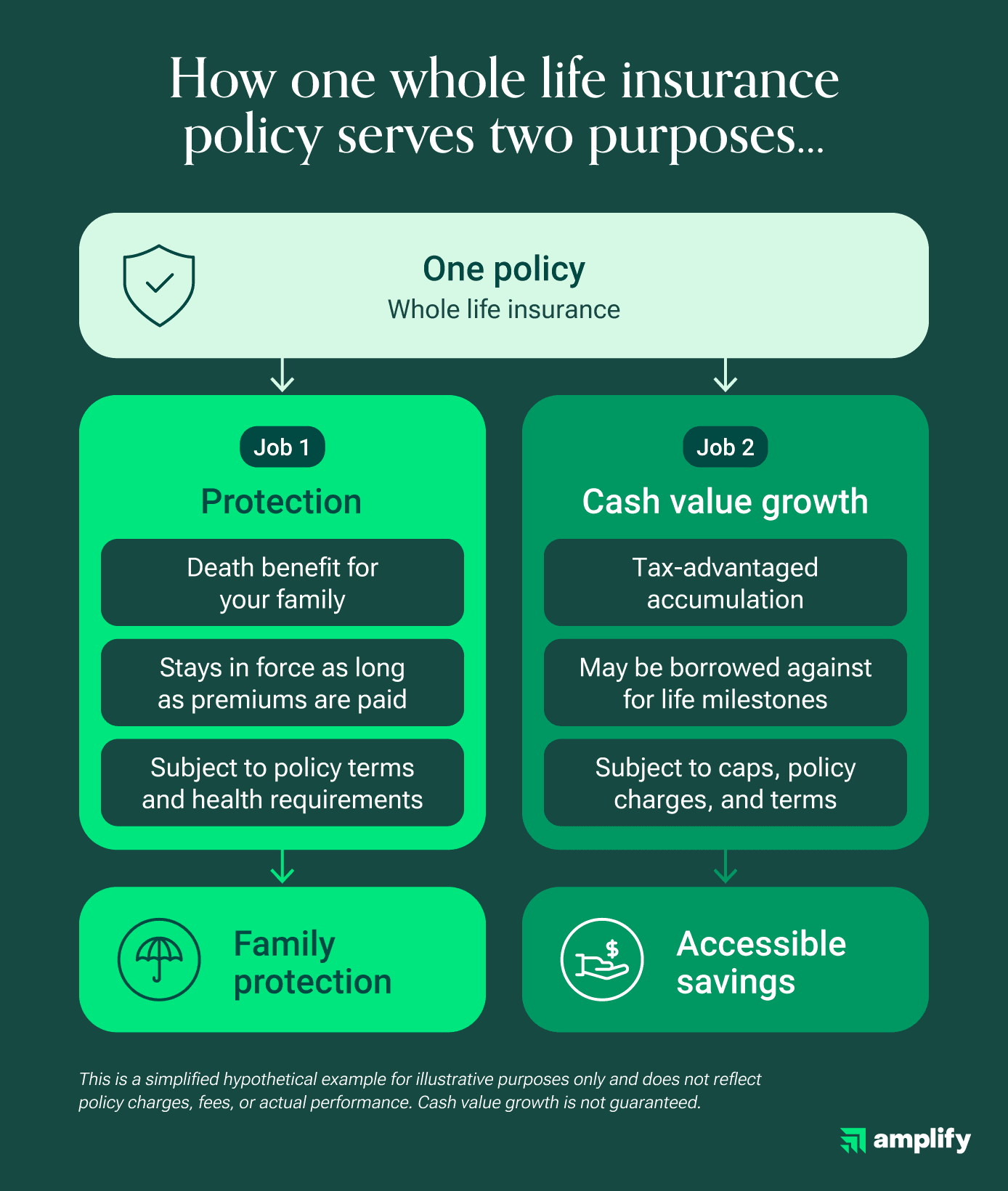
These are complex policies that might need some oversight, so it is essential to deal with a financial planner or another licensed specialist before selecting one. You might also compare IUL policies against other kinds of life insurance to see what works best for your circumstance. Depending on who you ask, indexed universal life (IUL) insurance coverage is either an effective wealth-building technique or an extremely complicated insurance item that guarantees more than it delivers. The truth could lie someplace in the middle . An IUL is very first and foremost a life insurance coverage policy. Like other permanent life insurance items, it can offer lifelong protection and build cash worth with time. Rather of earning a fixed rates of interest, it's tied to the performance of a stock market index, such as the S&P 500. Here's how indexed universal life insurance coverage works, who it might be a good fit for, and what to know before purchasing a policy. Indexed universal life insurance is a kind of irreversible life insurance that combines a survivor benefit with a cash value account. Unlike whole life insurance coverage, which credits your cash worth at a fixed interest rate, an IUL ties your cash worth development to the efficiency of a market index, such as the S&P 500, the Dow Jones Industrial Average, or the Nasdaq Composite(thus the "indexed"part of the name). Every premium payment you produce a UIL policy is normally split 3 ways: Just like all money worth life insurance, you may have the ability to obtain versus your balance, withdraw funds, and even utilize it to assist cover future premiums. Instead, the insurance provider uses the index as a criteria to identify just how much interest to credit to the money worth portion of your policy. If the index carries out well, your money worth may make more interest. If the index has a bad year, your credited interest may be lower(in some cases even 0%), depending on your policy's terms. If your policy credits the.
Comparing Whole Life Insurance Rates
full 10%, your money worth could earn about $5,000 in interest before charges and policy charges. When you hear that an IUL's cash worth is linked to the stock market, you may presume you'll earn whatever the market makes. But that's rarely how it works. A cap is the optimal interest your policy can earn throughout a crediting period. You can generally find your cap in your policy illustration or documents.
Even though the index increased by 15 %, your policy would just be credited 10 % before fees and other policy charges. If your policy has an 80 %involvement rate and the index increases 10%, you would receive 8%interest (80%of the index's gain), assuming no cap restricts the return. Most indexed universal life policies let you pick in between two types of death advantages: Your beneficiaries receive a fixed death benefit throughout the life of the policy.

Latest Posts

Finding Fast Individual Life Insurance Quotes
Evaluating Medicare Advantage Coverage Choices

Final Expense and Burial Insurance for Seniors